The Bloodvein River, Manitoba Canada
Day 1. Our journey on the Bloodvein started at Artery Lake and ended on the outskirts of the Bloodvein settlement, covering 225 km with a drop of just over 100m. We were picked up from our hotel in Winnipeg, and the first 310km was by road to our float-plane base at Red Lake, where we were to spend an unplanned two nights. Albert, our friendly and very capable outfitter, sorted the kit faff and food provision that afternoon, and we were ready to go the following morning. However, the float plane was grounded because of the thunderstorm forecast, and our start was delayed by 24 hours. We spent the day dodging torrential rain, exploring the small village exhibition, watching the World Cup, and eating an enormous pizza at Red Lake’s premier restaurant (Population of Red Lake: 4000).
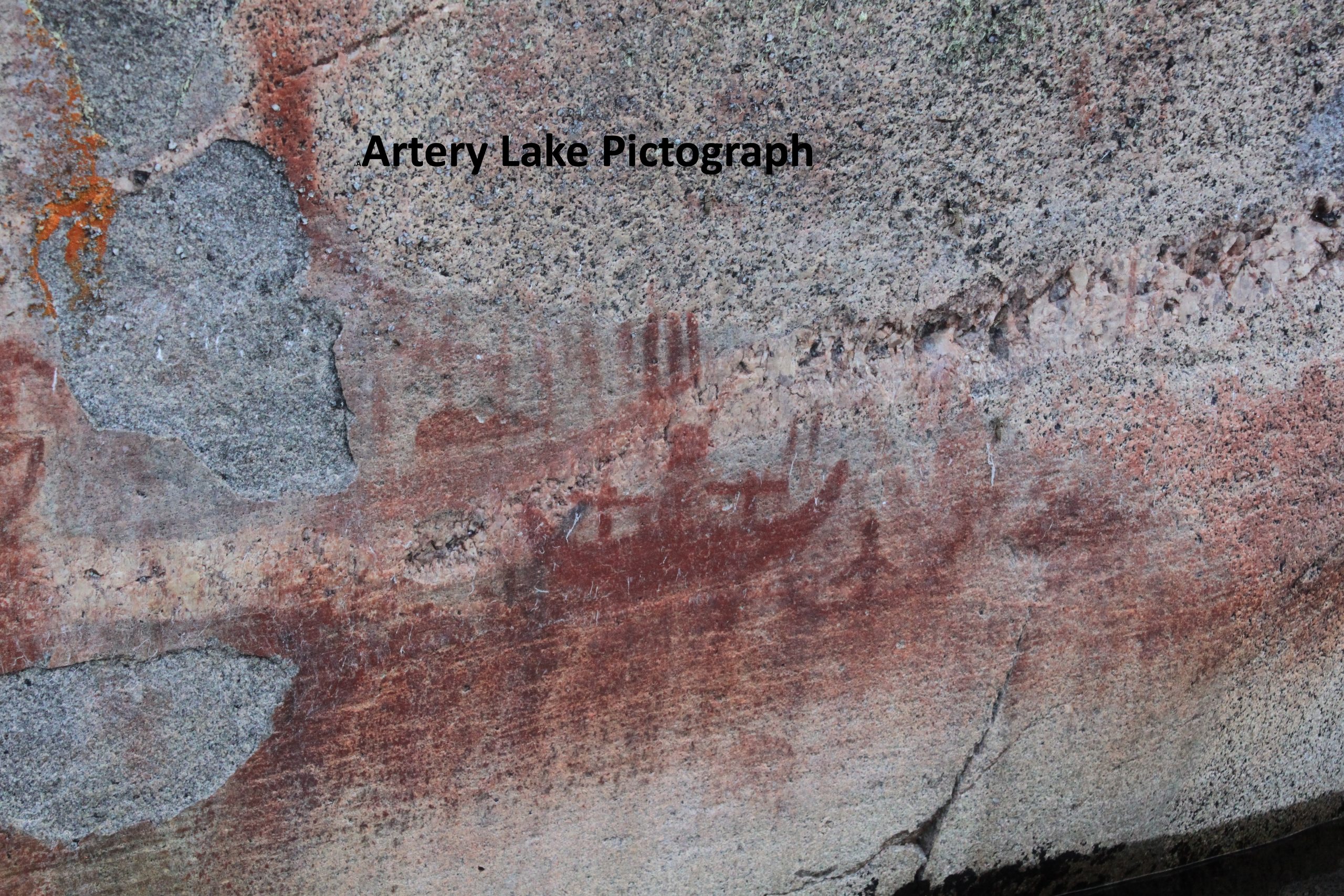
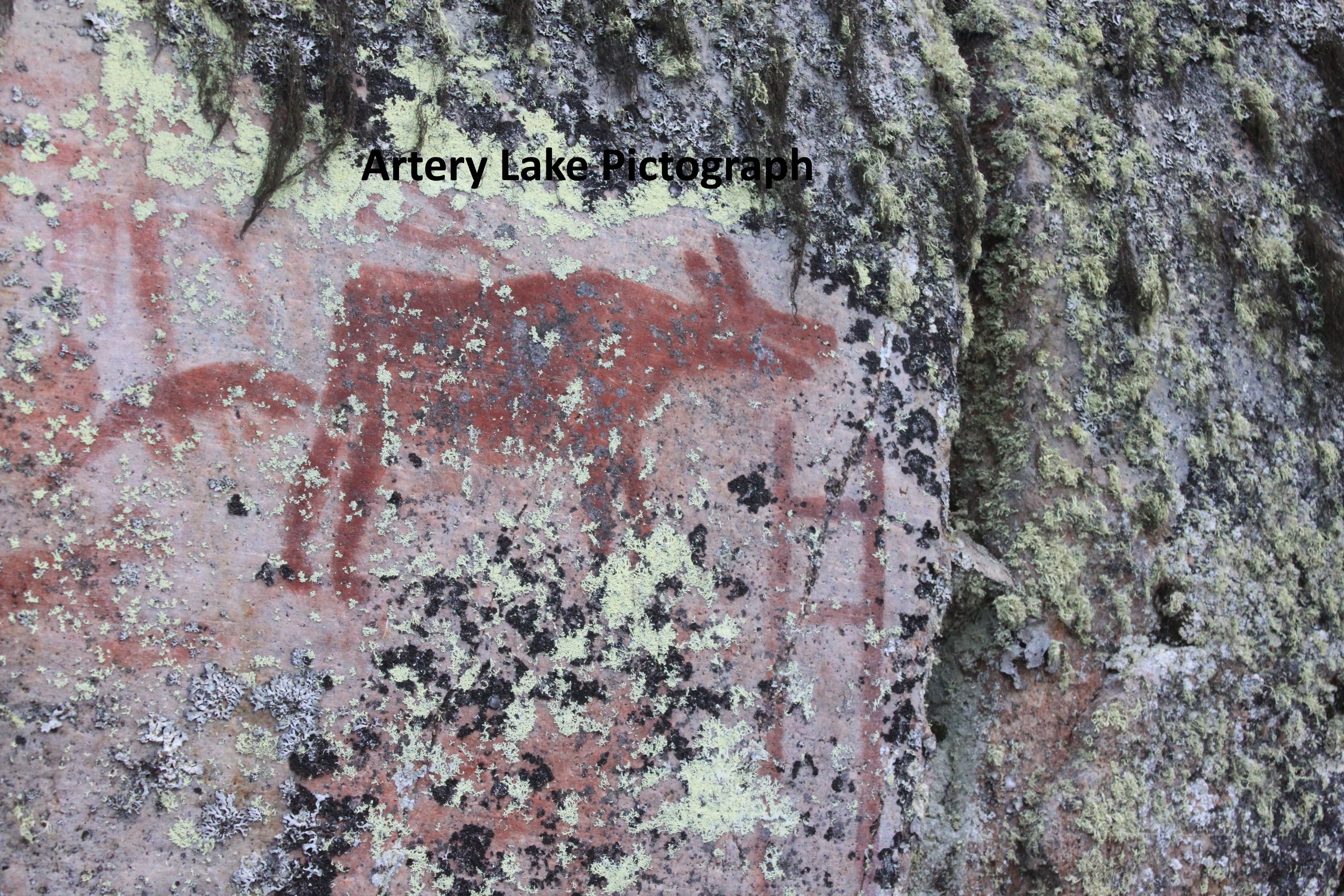
The following morning, we boarded our two float planes with 850 kg of food, camping gear, and personal kit for the 55-mile flight to Artery Lake, arriving in sunshine with time to explore before heading downriver. On the eastern side of Artery Lake we visited the pictograph site where history is emblazoned on the rock face in a myriad of spiritual characters depicted by ancient shaman artists. It is considered bad luck to pass by these places without ceremony, so Ollie handed a little tobacco around to all paddlers. We each performed our own act of reverence, and with a little prayer for a safe journey, we each dropped the tobacco into the lake below the cliff face. Then we turned into the wind and paddled back across Artery Lake to start our descent of the Bloodvein.
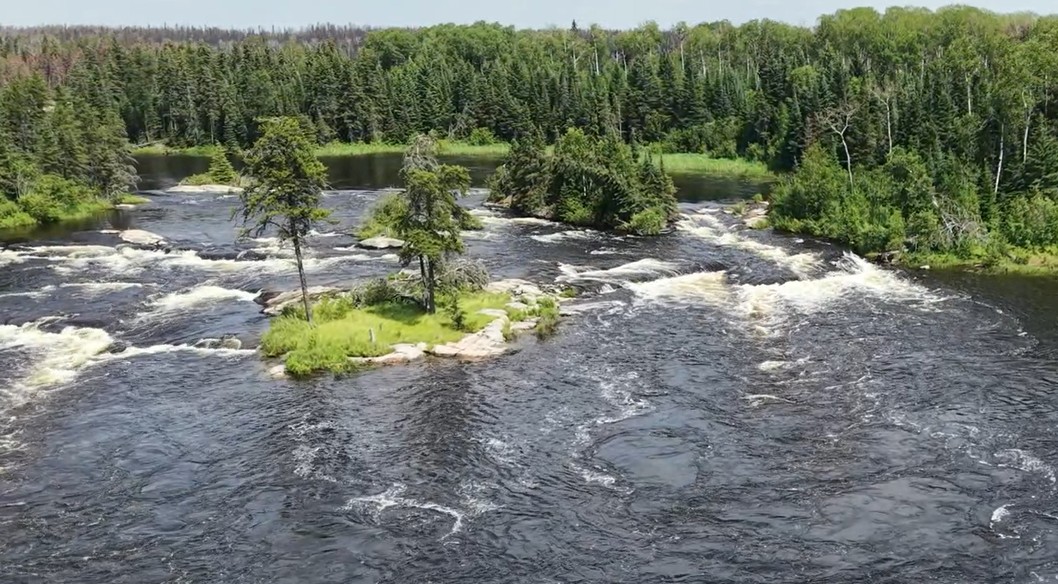
The Bloodvein River comprises a series of lakes connected by rapids and falls, making travel possible both downstream and upstream, which helped native peoples use it for thousands of years. A comprehensive guide detailing each runnable rapid was compiled in 1951 by Hap Wilson and Stephanie Aykroyd; this was our reference for the trip.
Day 4 to Day 16
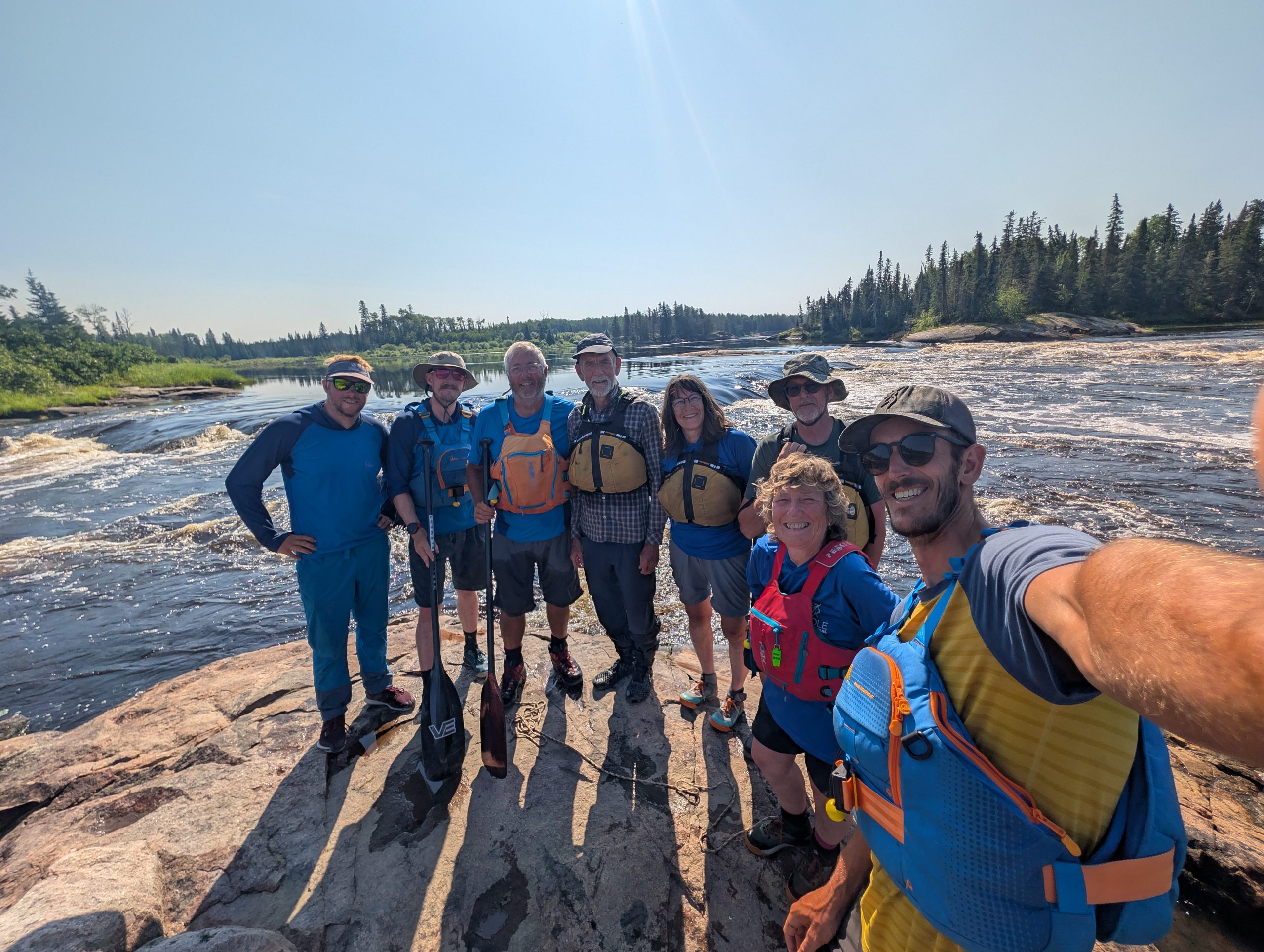
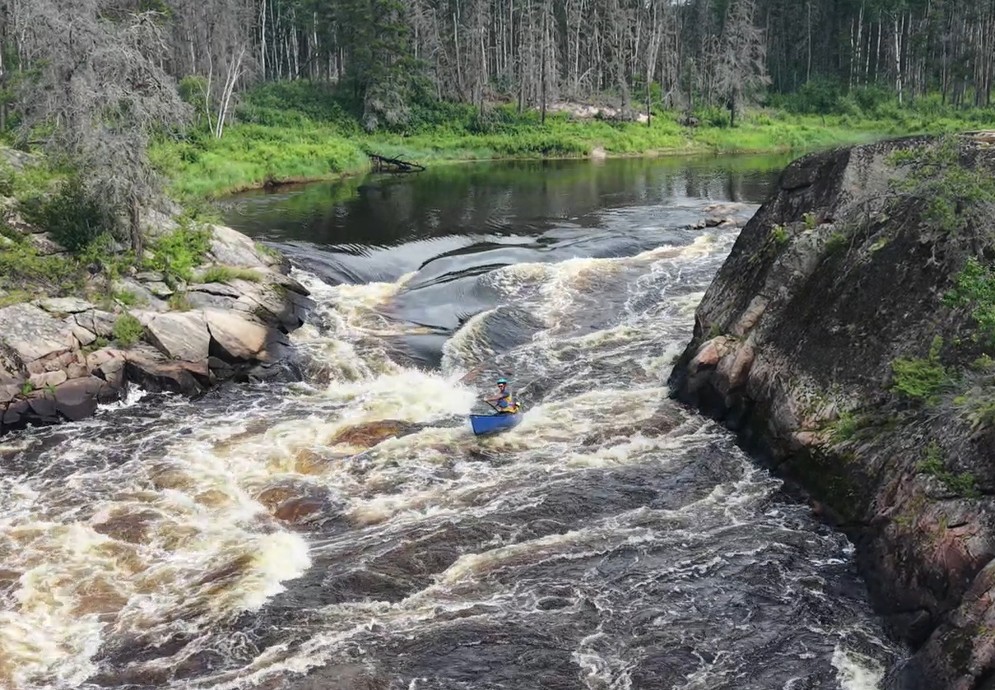
Our canoes were lightweight composite expedition boats, ideal for carrying our heavy loads, not so great in white water. Our guides (Dave Janes Jnr, Ollie Sandeman and Liam Green) shared two Pocket Canyons when one of them was not tandem paddling with the rest of us.
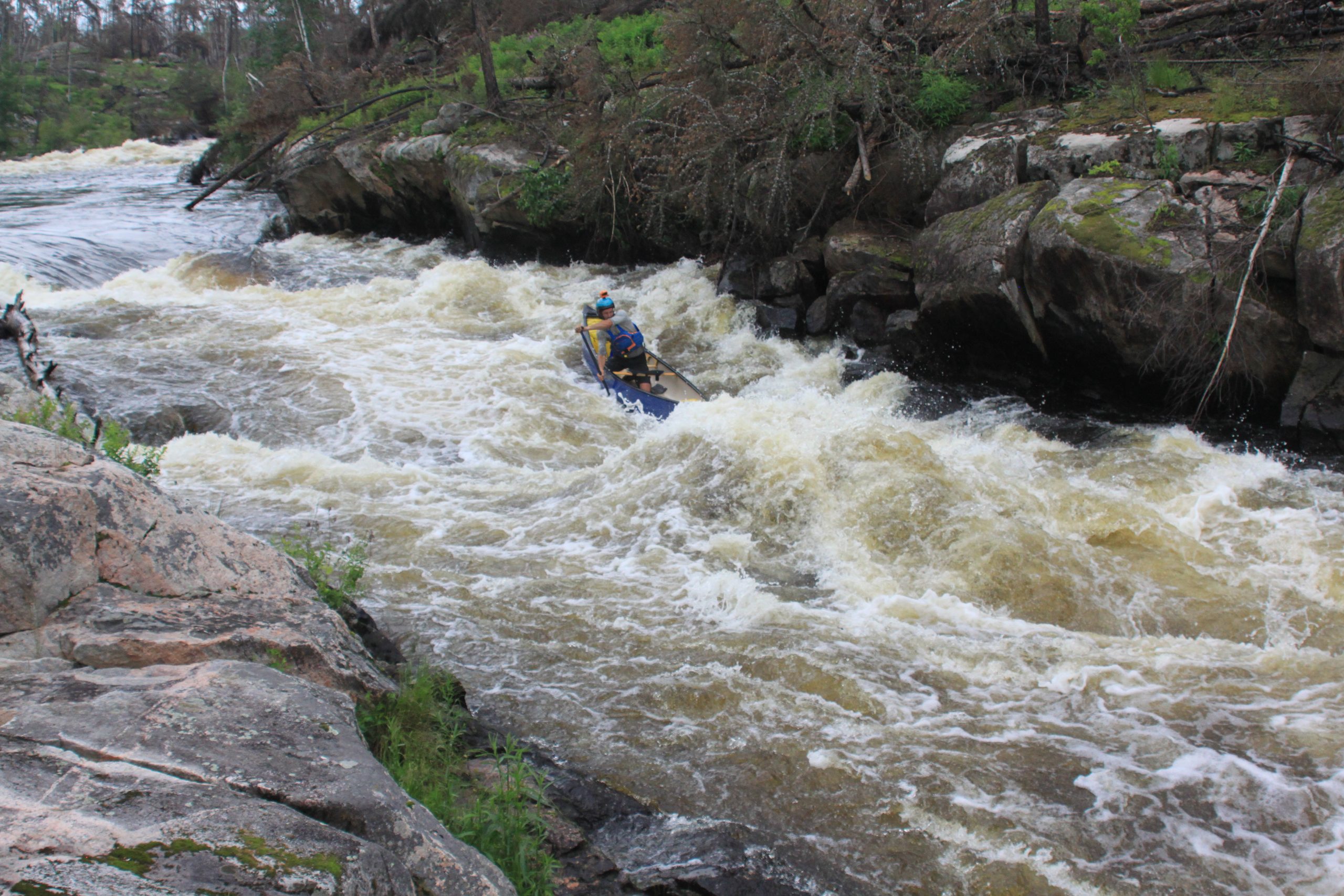
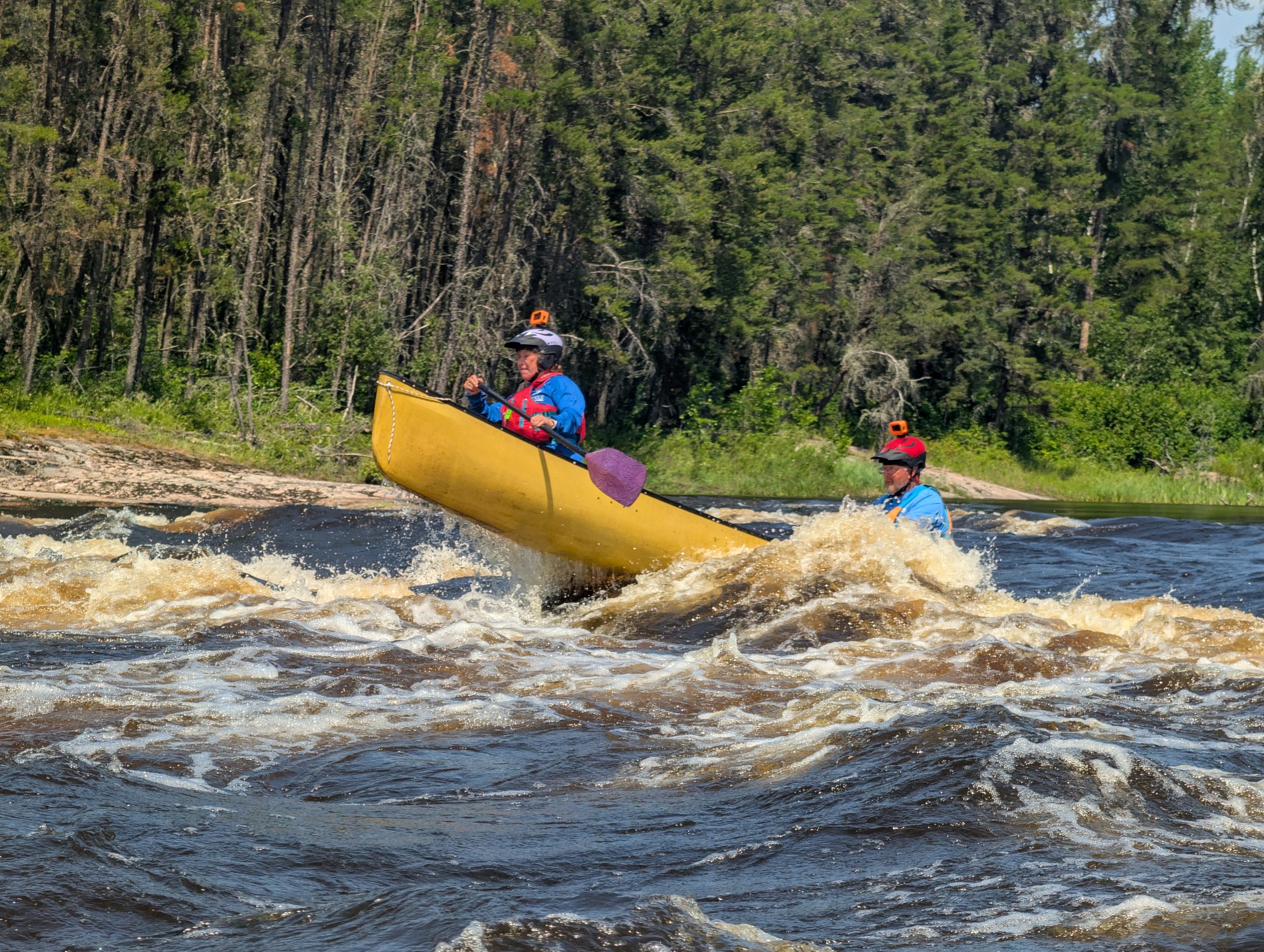
The river was at a high summer level, which increased the portaging and lining and made some of the easier rapids more challenging. A typical day started on the water at 09.30, with a 1-hour lunch stop, and we arrived at the night’s camp around 16.00 after 20km of paddling and 2-3 portages/linings. The final rapid on day 1 saw our first boat capsize, something 7 of us would experience over the next 2 weeks.
Our capsize was on day 10 at a rapid called Shangra-La, a grade 3 drop. Afterwards we renamed it ‘telly tubby falls’ after the GoPros on our helmets being the only part visible above the frothy white water as we were flushed out of the rapid.
Although we had a few rain showers, the weather was predominantly dry and very warm. The water temperature made an afternoon swim pleasurable, even though we had the unpleasant experience of leeches after one swim.
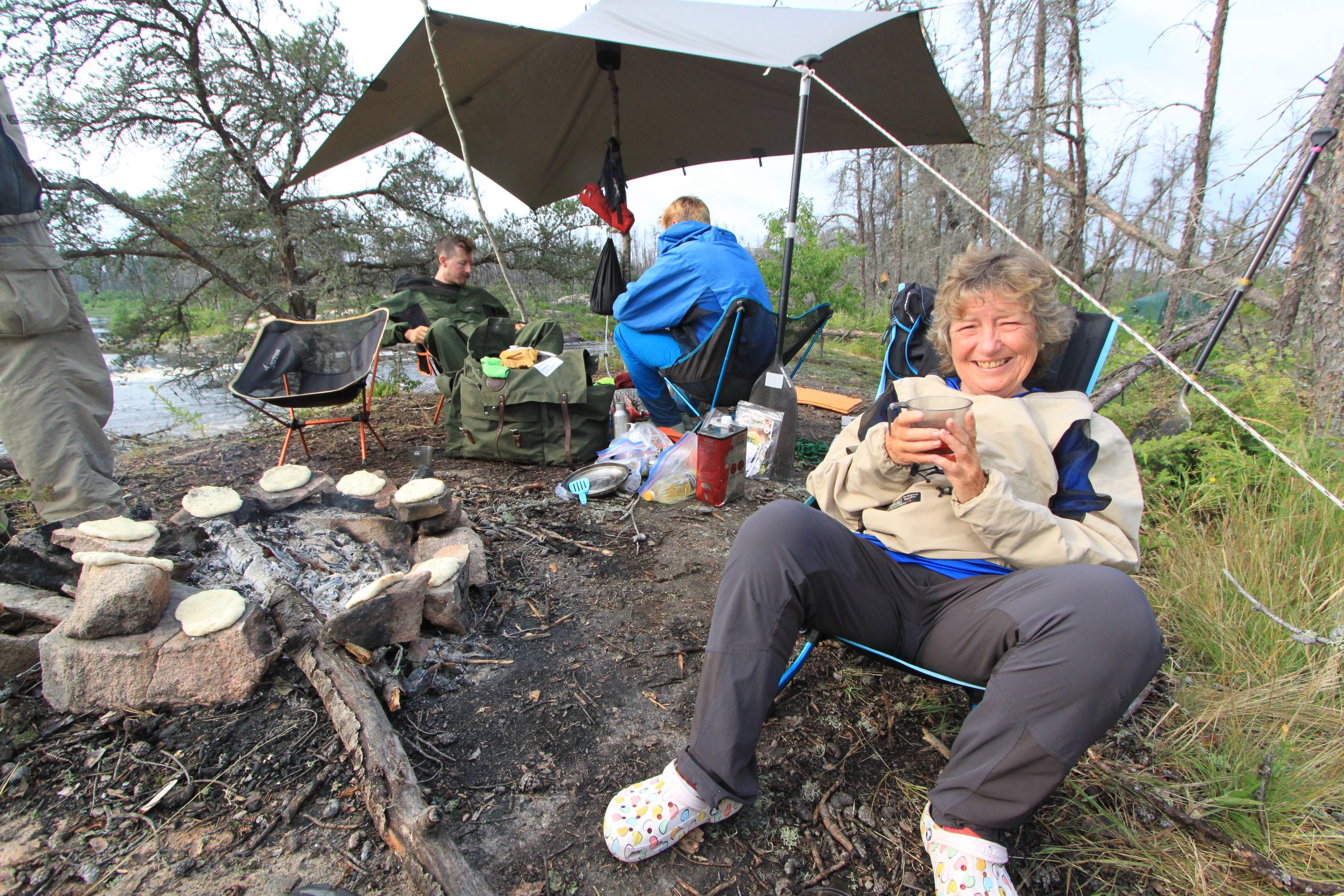
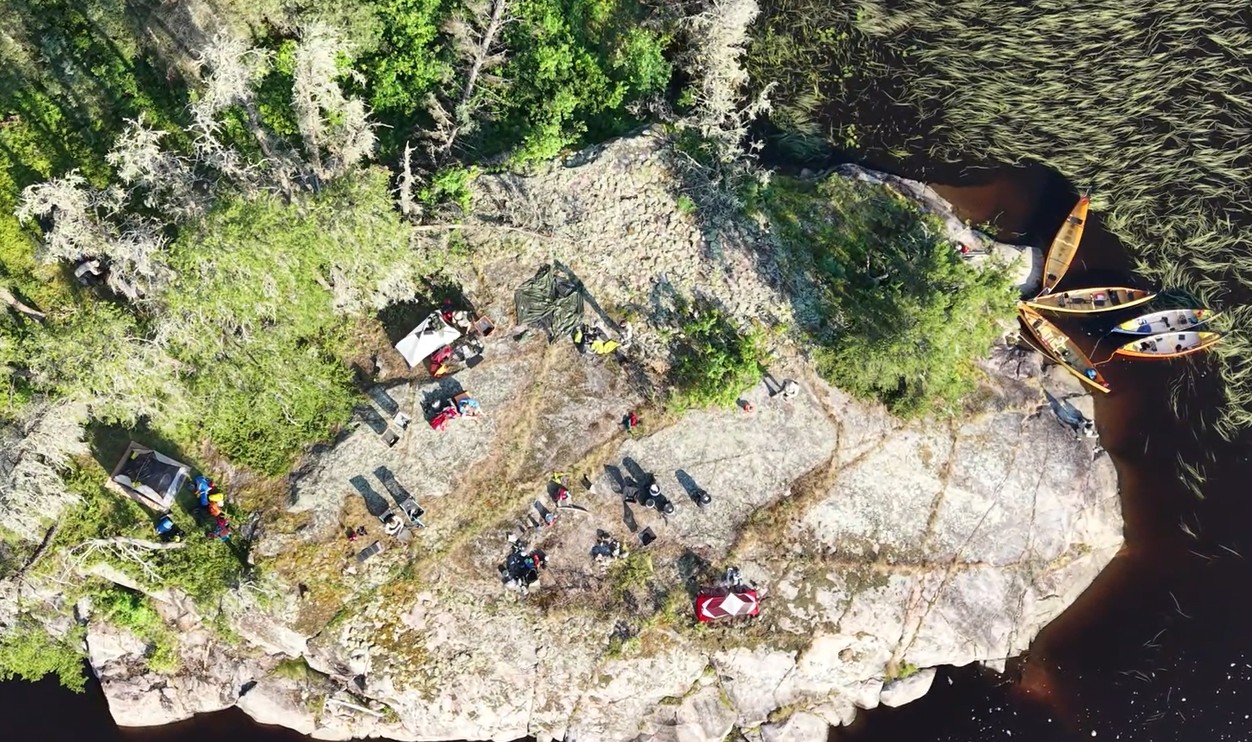
Campsites ranged from burnt-out clearings (from previous years’ fires) to rocky ledges beside waterfalls.
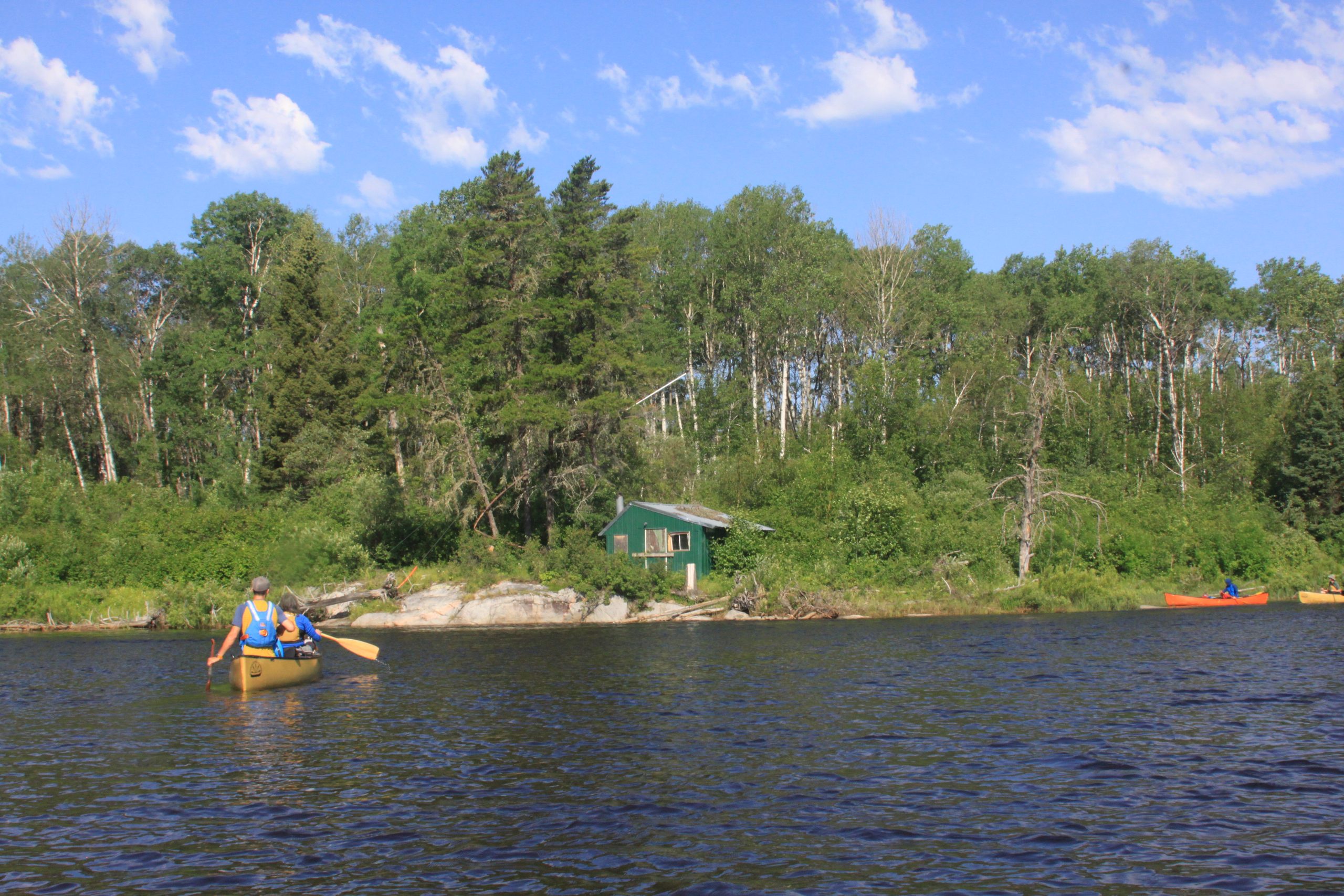
After leaving Artery Lake, we saw no other paddlers, fishermen, hunters or trappers. However, at various points on the river we found evidence of other humans, notably two trappers’ huts, fire pits at campsites, and, on one occasion, a good pair of trainers and a fishing rod that we liberated from the wilderness. Except for the above, all our campsites were clean, with travellers obviously caring for the environment and leaving no trace.
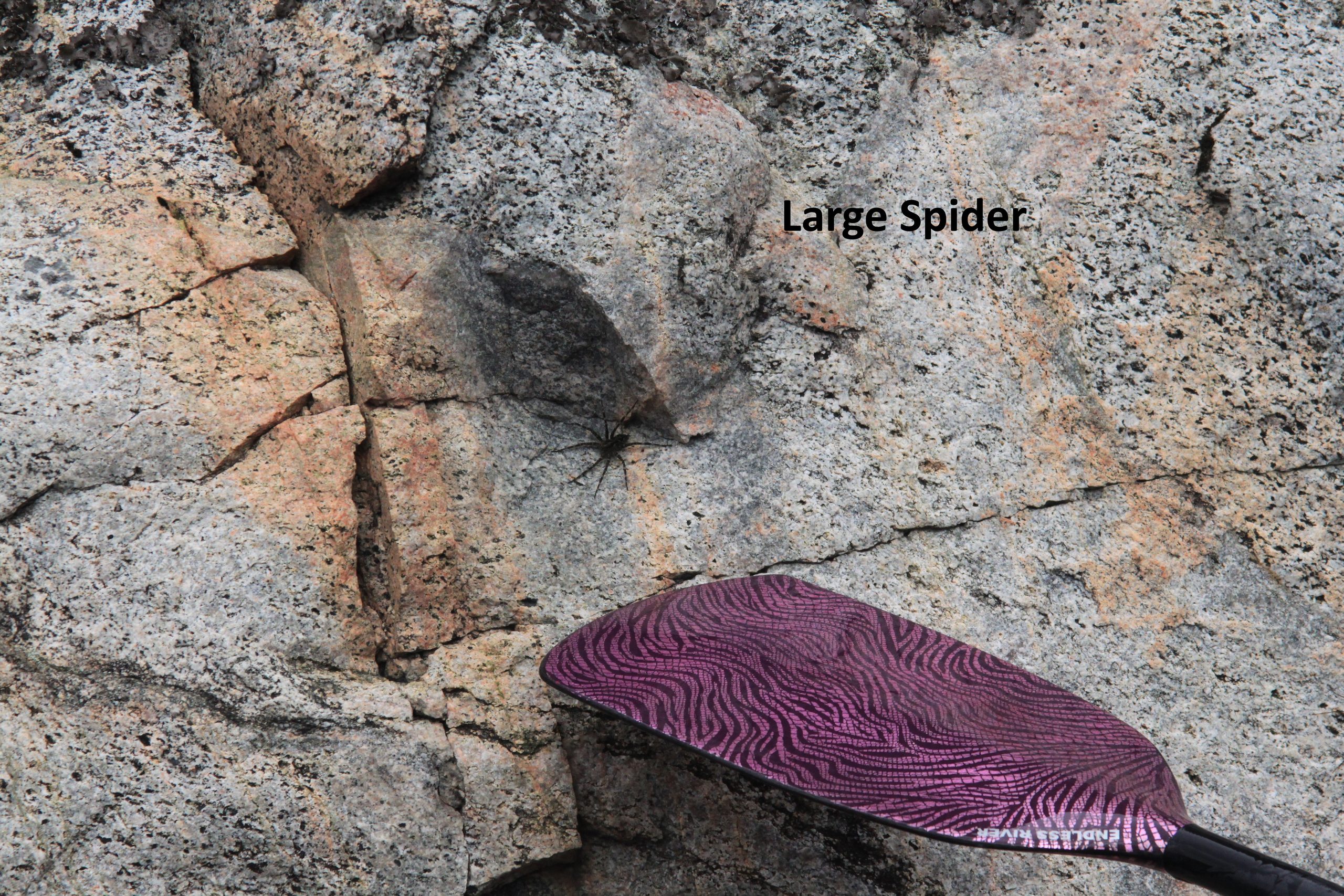
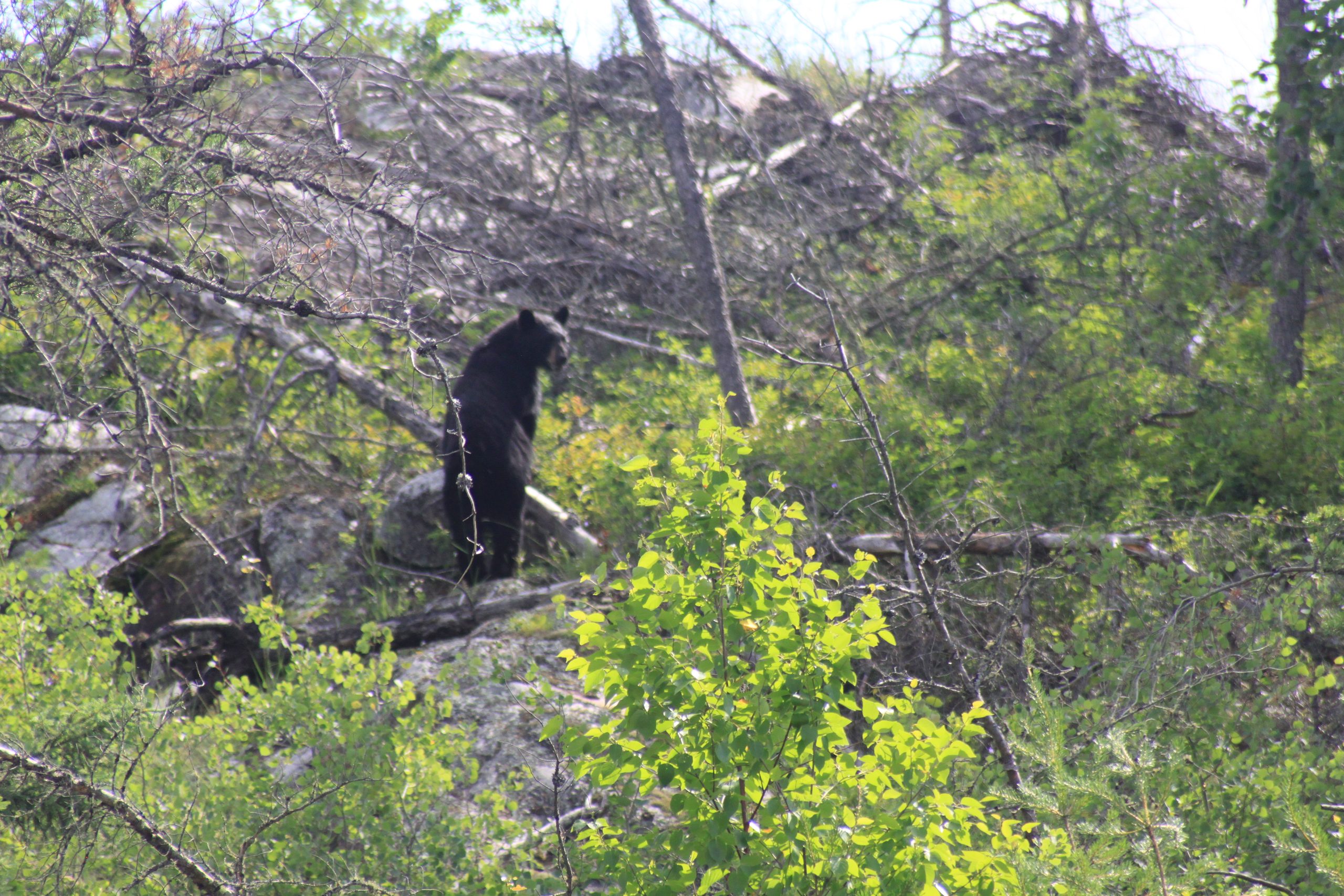
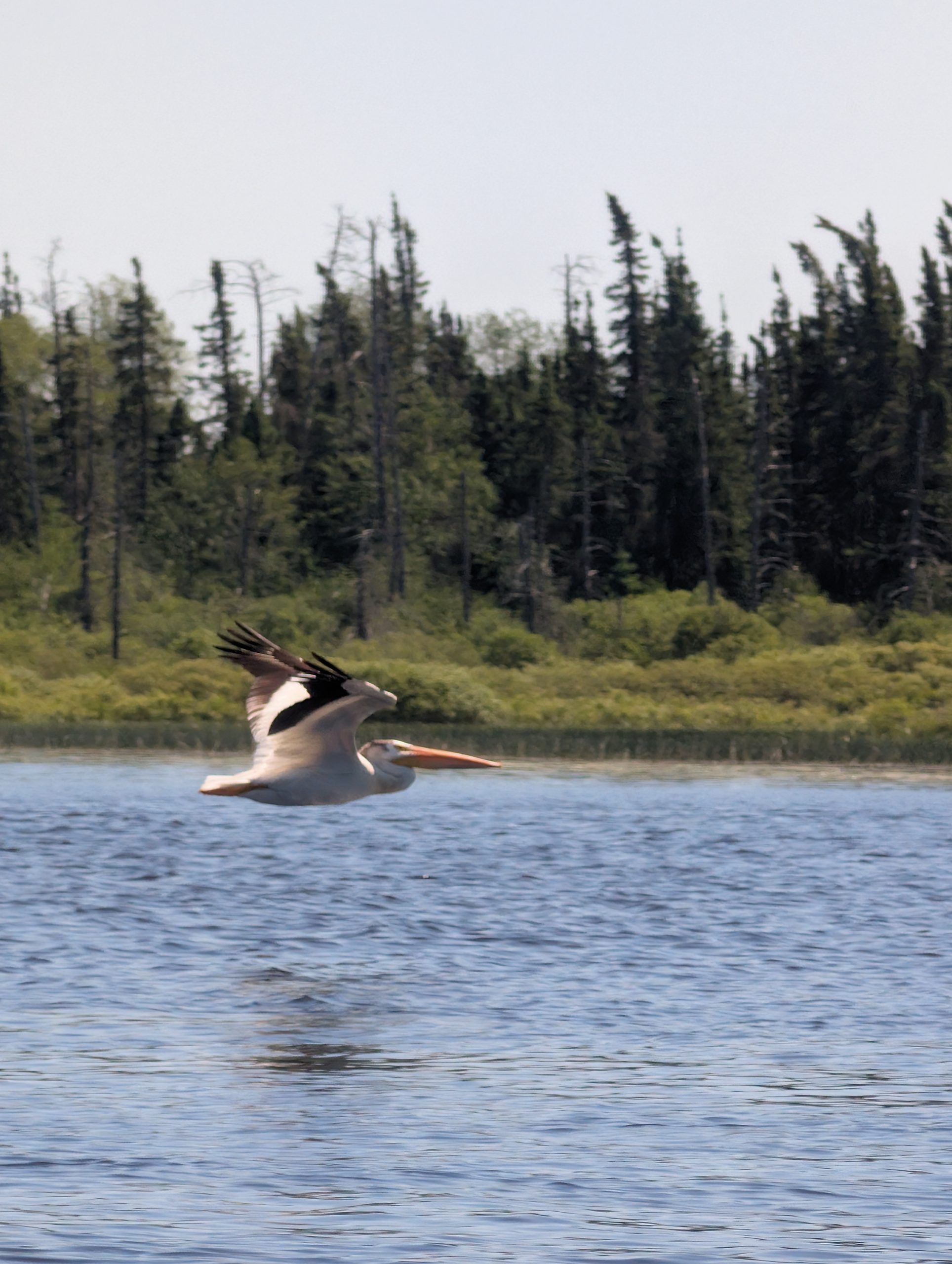
We were hoping to see bear and were not disappointed, with 4 separate sightings of black bear. Each time, the bear walked slowly into the woods, with an occasional glance back at us. Other wildlife included eagles, swans, pelicans, otters, beavers, moose, very large spiders and a garter snake.
Our guides (Dave Janes Jnr, Ollie Sandeman and Liam Green) did an excellent job keeping us safe (but not always dry), carrying far more than their fair share of the kit on the portages, and providing a fully catered breakfast, lunch, and evening meal. Steak, Salmon, beef, bacon, eggs, pancakes, bannocks, and sausages all featured during our trip, along with very good Canadian-sourced dehydrated meals. Undoubtedly the best expedition food most of us had ever enjoyed. On our last night we shared a bottle of rum, something that had been carefully carried from Winnipeg and our first alcohol since leaving Red Lake.
Day 17: Albert met us at the dirt track bridge over the river just outside the First Nation Reserve of Bloodvein Village. We loaded the boats onto the trailer and headed out of the wilderness, arriving in Winnipeg 4 hours later for hot showers and a celebratory meal.
Finally, would we go back……… the answer would be a definite yes if there were no other rivers and wildernesses to explore. Our next expedition is in Sweden, but we thoroughly recommend a journey down the Bloodvein through Manitoba’s boreal forest.
The Harkan River, Jamtland, Sweden
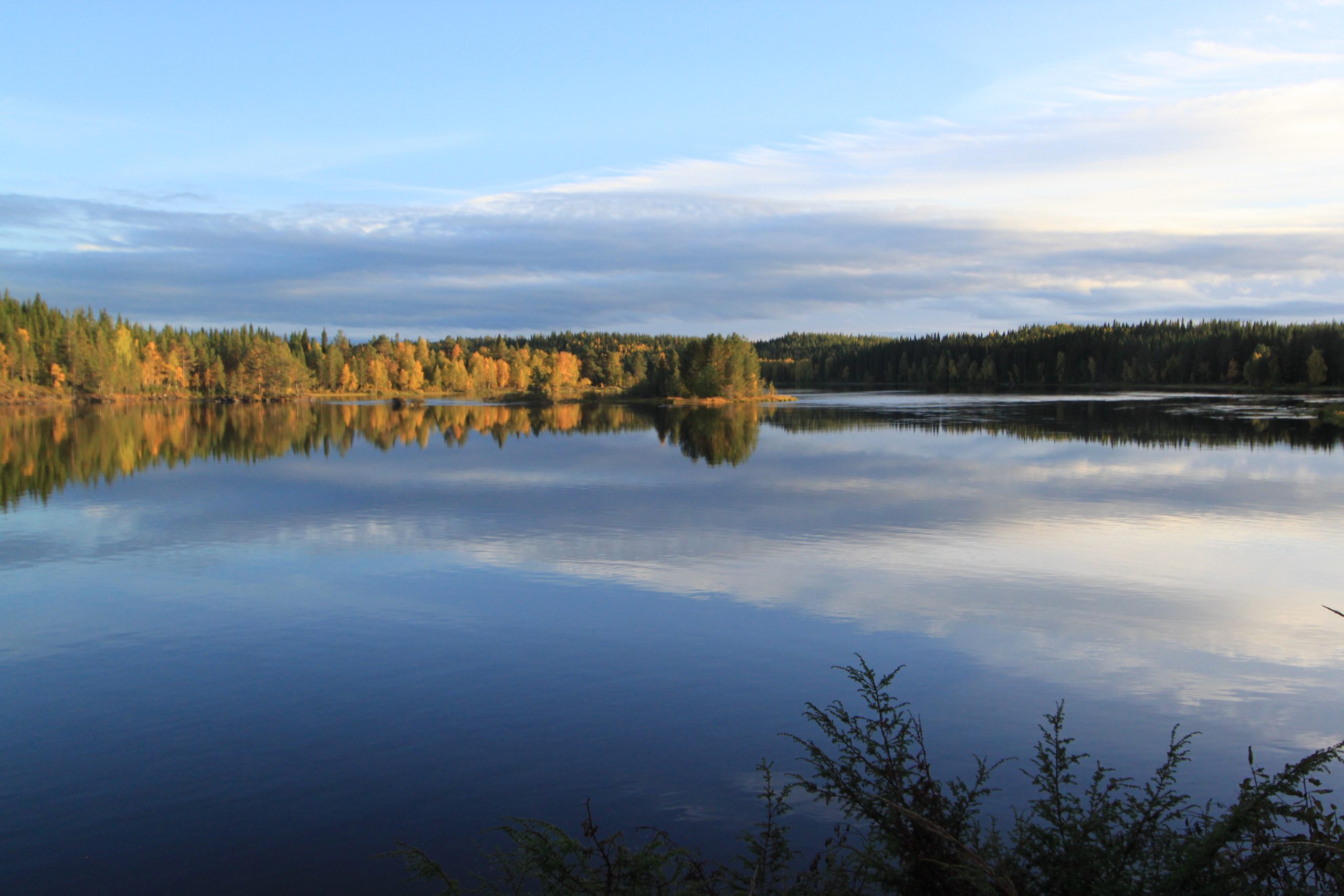
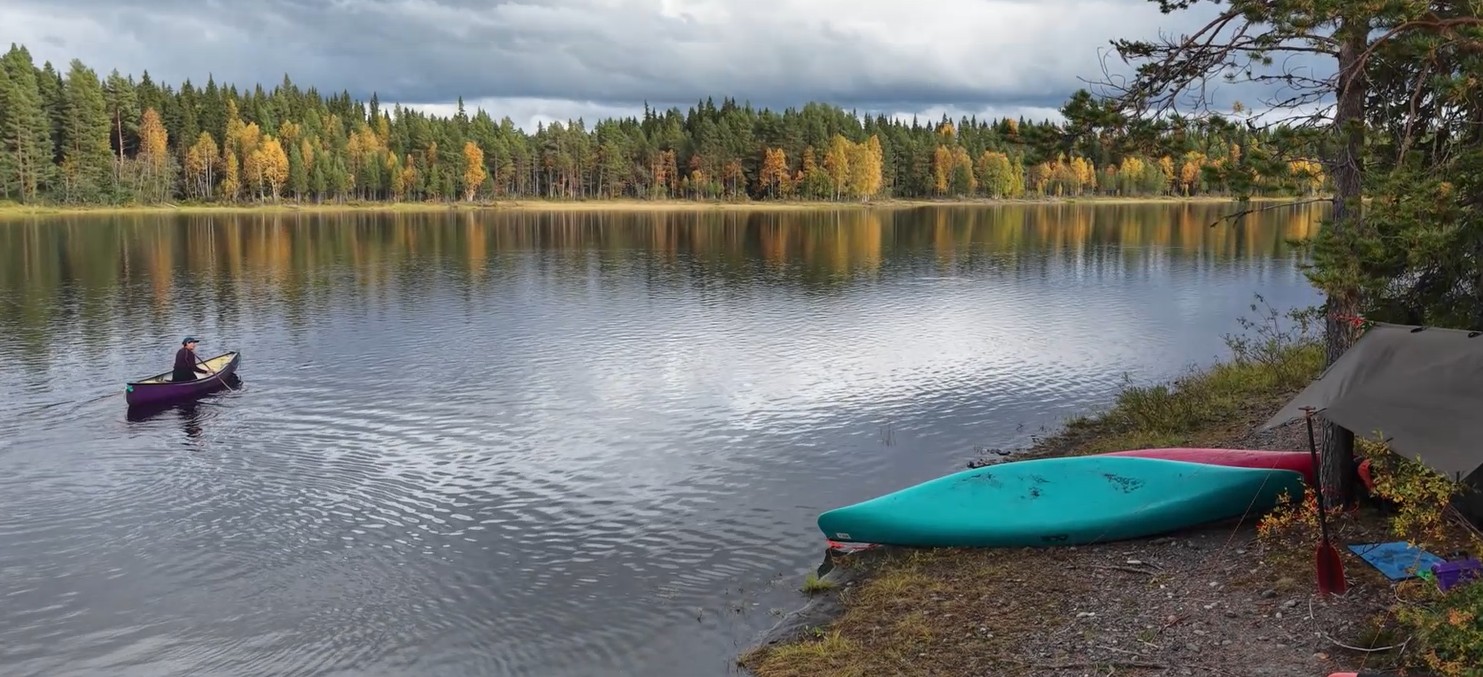
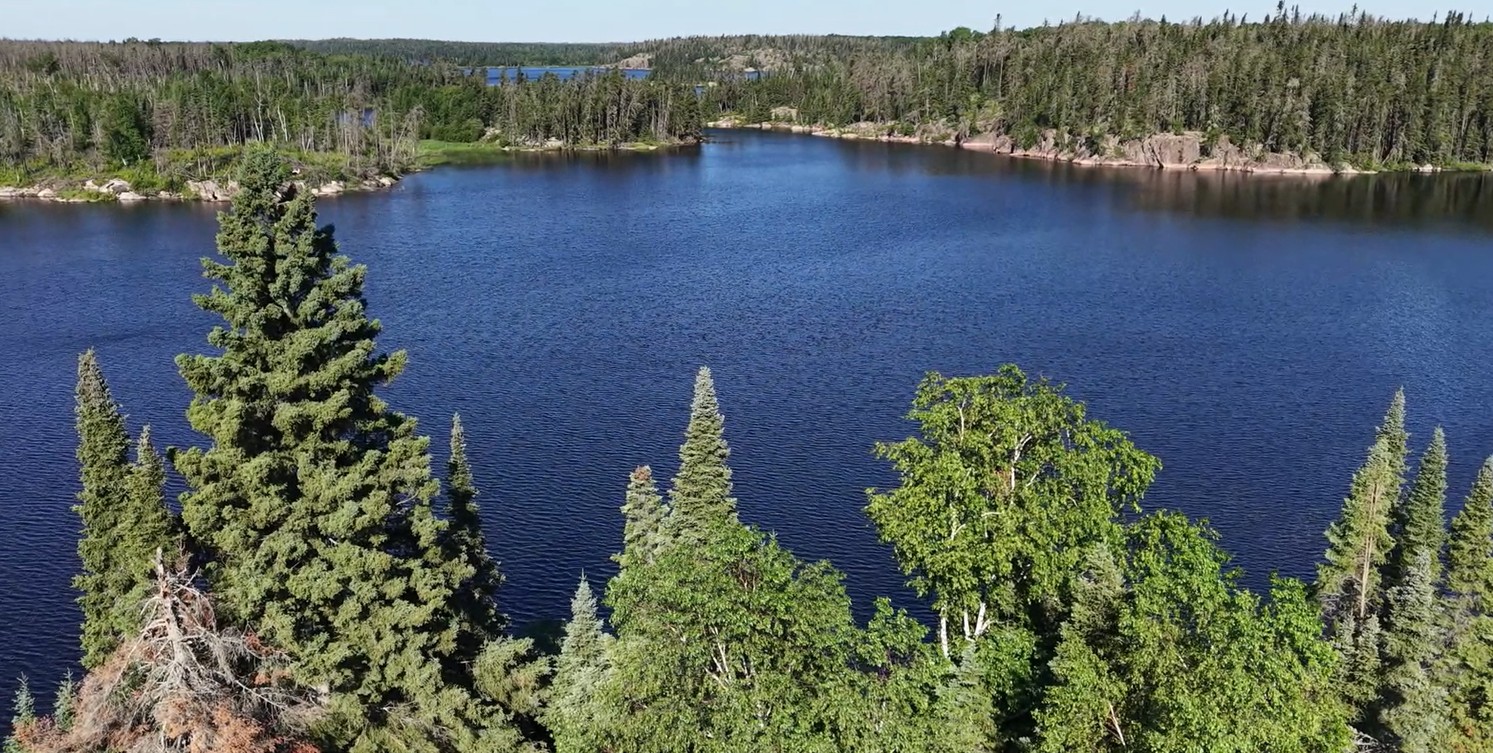
The Harkan isn’t a white-water river. It is a gently flowing waterway through some of Sweden’s most pristine wilderness. Vast forest; clear, cold waters flow between wide bays and lakes. It’s not mountainous, but boreal forest, small islands, rocky shorelines, and small clearings with cabins and summer houses.
Getting off the plane at Östersund, we were all struck by how fresh and clean the air was.
Our rendezvous point was the campsite at Lit, half an hour from Östersund, the region’s cultural and economic centre. The community sits on the side of a large lake, surrounded by forest. Water and trees dominate the whole region.
Dave Janes (Snr) was our guide and had brought boats over from the UK. So, paddling familiar prospects, flames, fireflies, and a pocket canyon, we were looking forward to interesting paddling and thriving in the wilderness.
Day 1 Our minibus journey to the start was memorable for two reasons. First, we passed a temporary road sign that our driver confirmed warned of a shoot taking place. We then encountered several individuals with rifles sitting on roadside platforms, spaced about 100 m apart, looking into the forest opposite the road. Our driver explained that a beating team would be in the woods driving moose toward the road, at which time the hunters would shoot the moose (hopefully missing any passing traffic). Our driver went on to explain that it is extremely difficult to carry a shot 300kg moose any distance through a forest. A lot easier to shoot them on the road and put them in the back of a truck.
The second memorable moment was learning our driver was a singer/song writer, then having to listen to his endeavours on the van’s CD player.
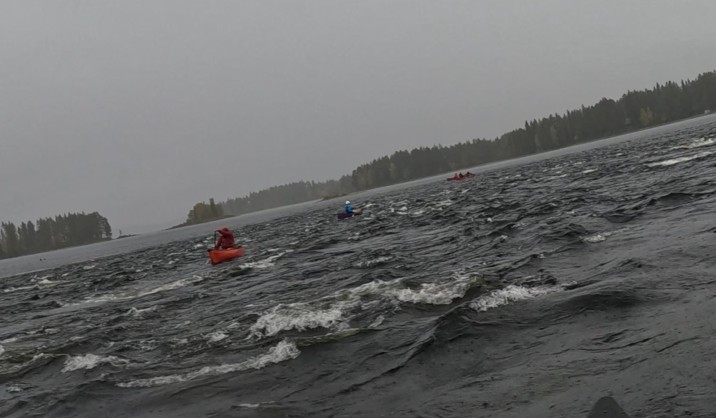
By early afternoon, we were on the water, into a gentle rapid before entering our first lake, Lovsjon, about the size of Llyn Tegid. Our first campsite was on the far end.
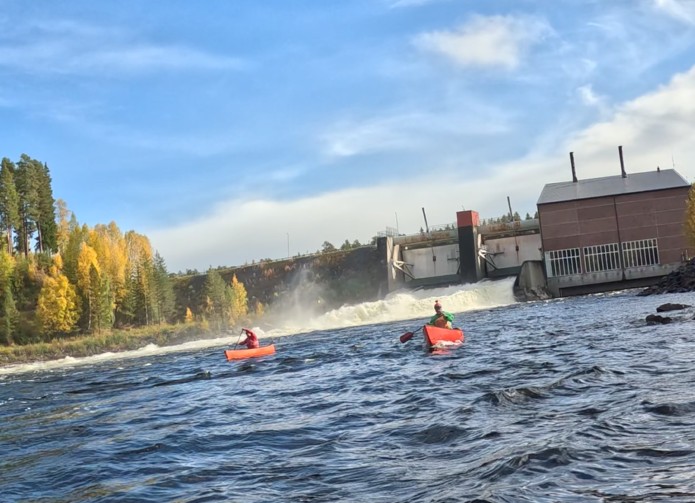
The following 5 days followed a similar pattern of slow-moving river, gentle rapids and large lakes. One boulder field of a rapid was portaged on day 2 and two subsequent dams/hydro electric plants had to be portaged on our way back to Lit.
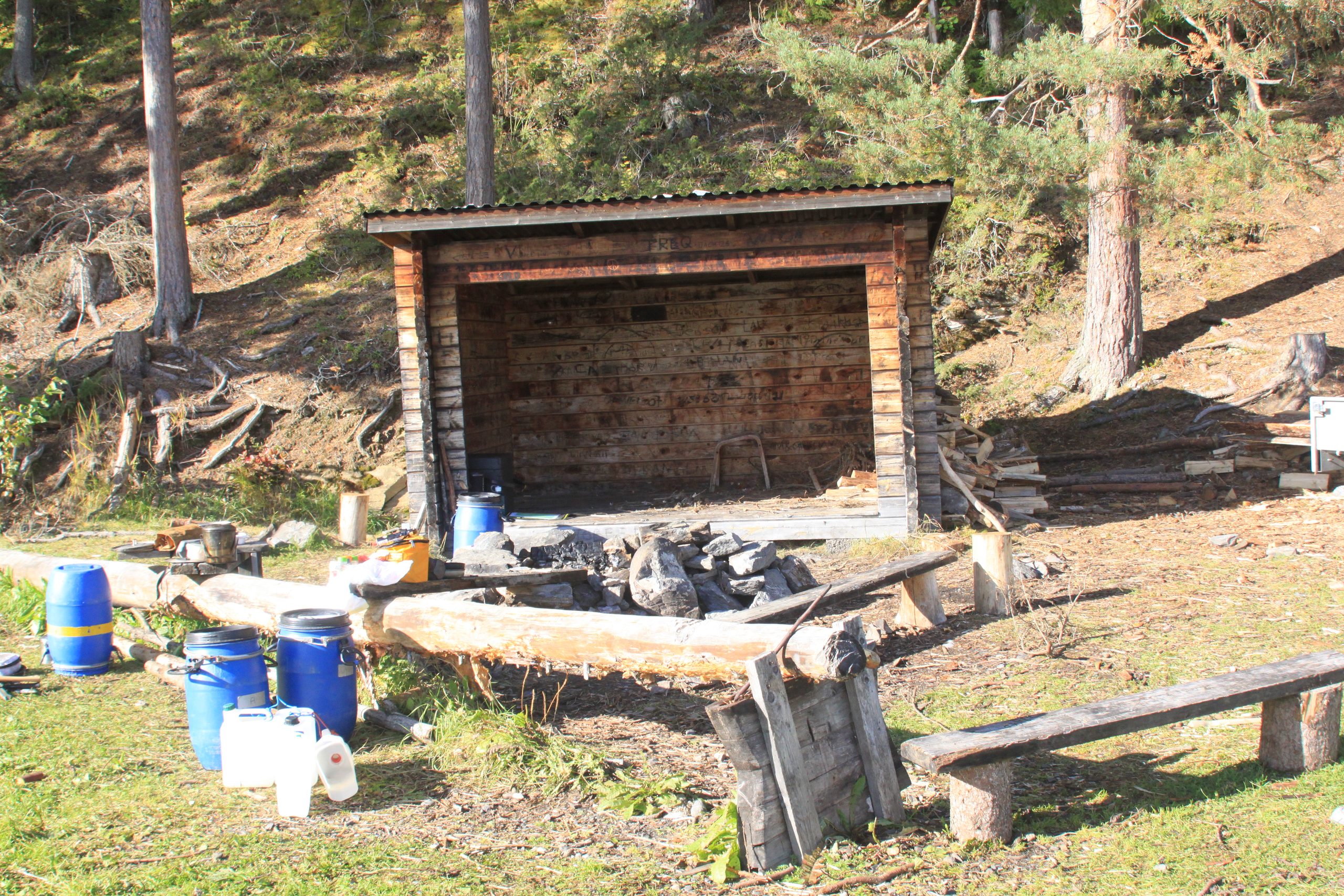
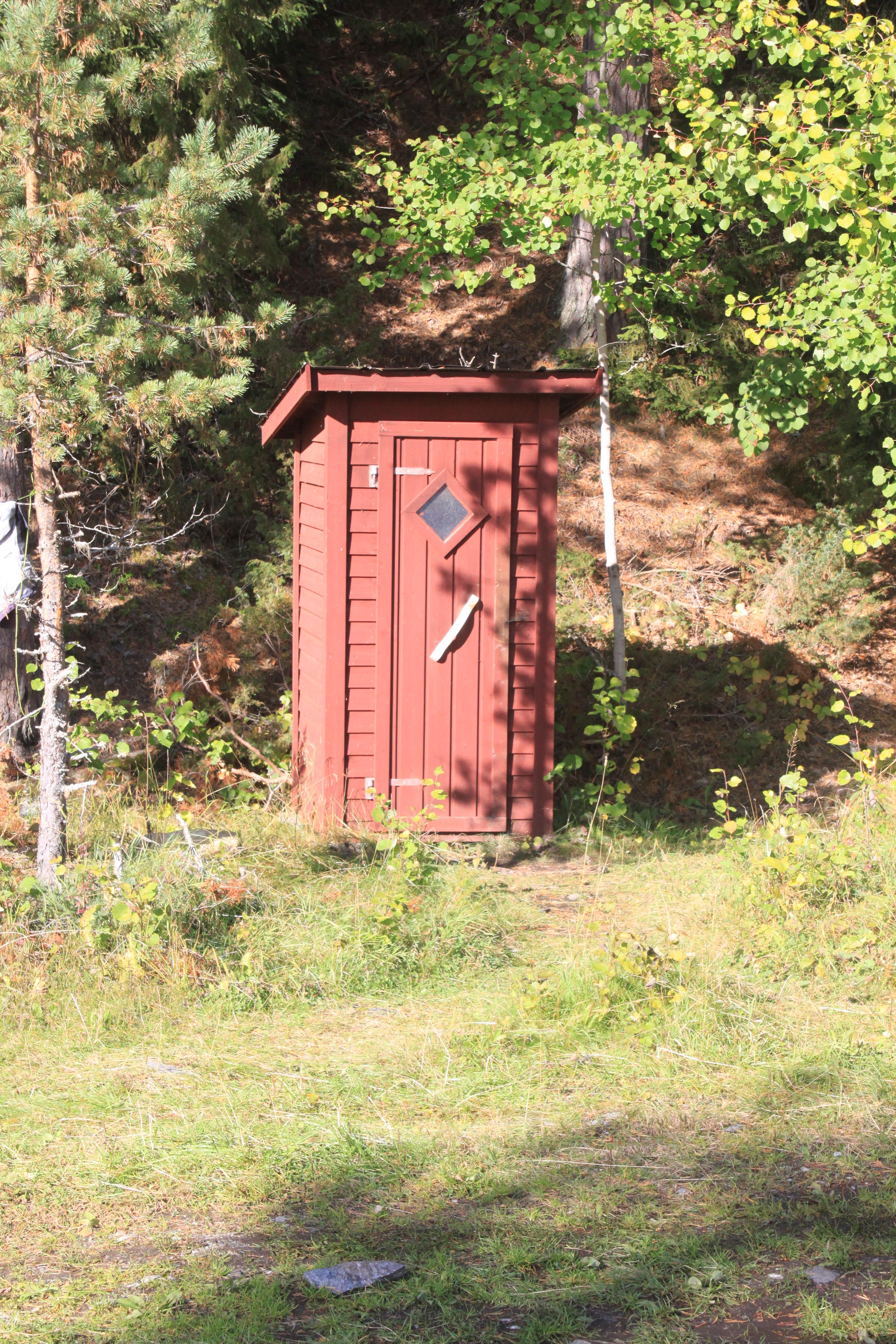
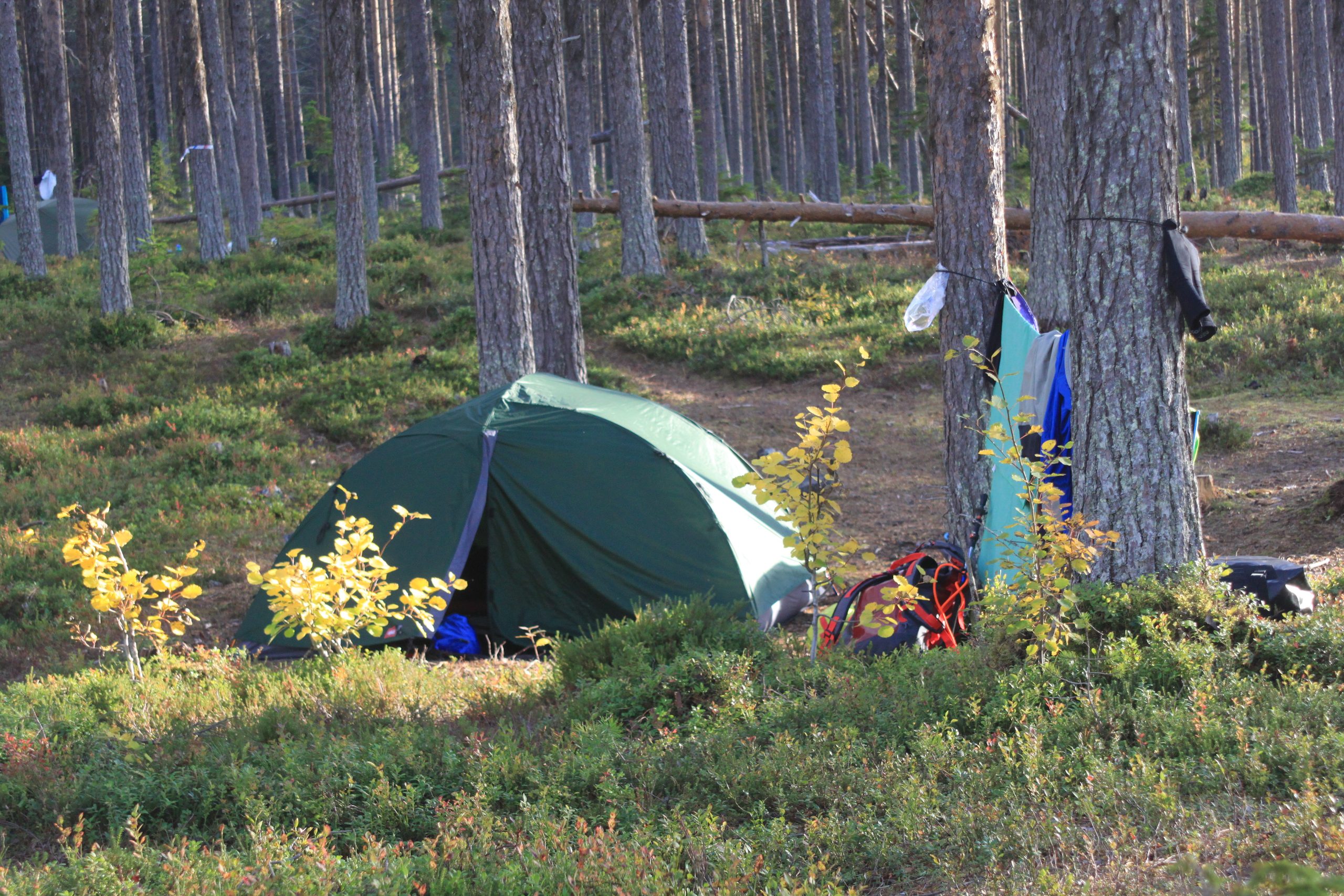
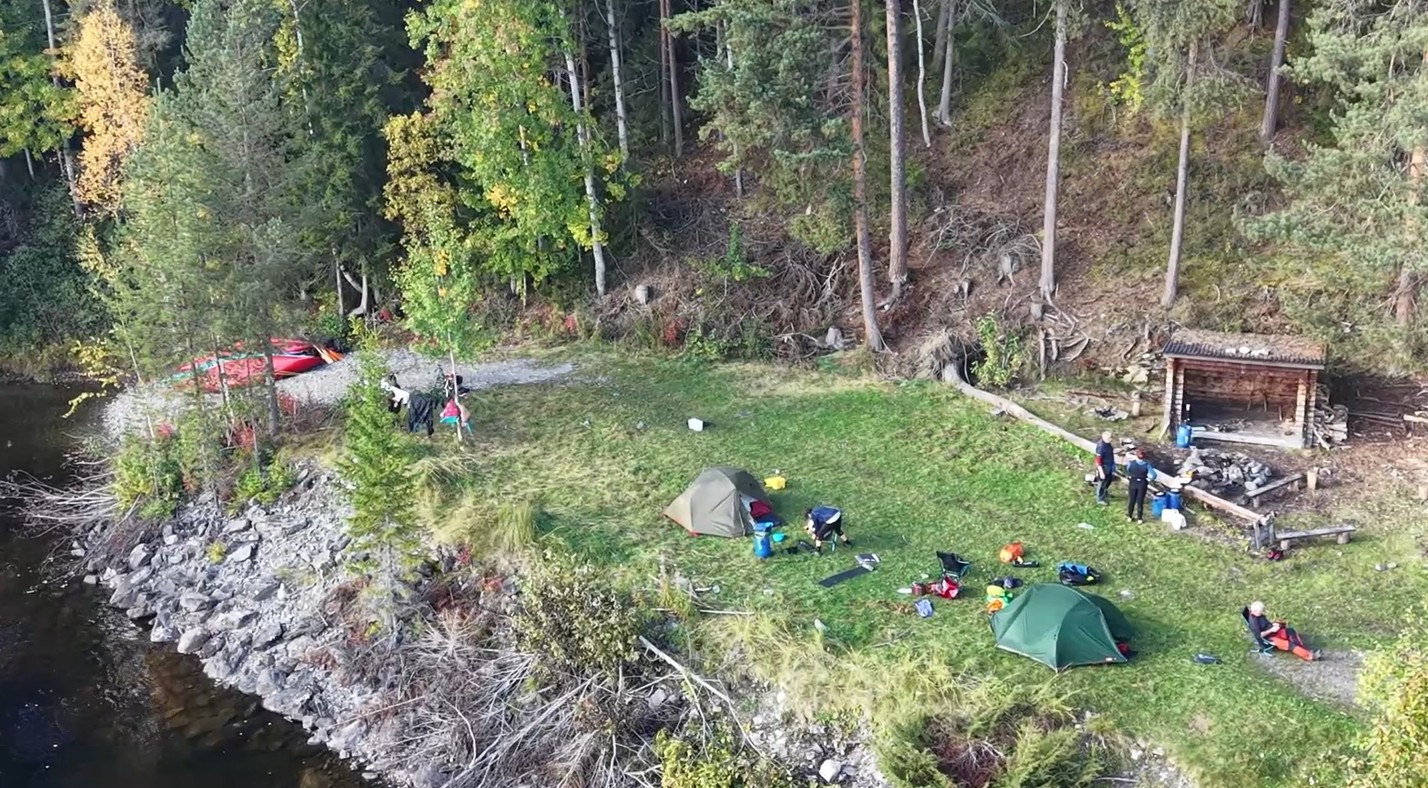
Campsites were typically on flat grass clearings above the river. Some had wooden shelters and a composting toilet; others had no shelter or facilities. All had stunning views and no midges. Autumn was upon us, and we all appreciated the winter sleeping bags.
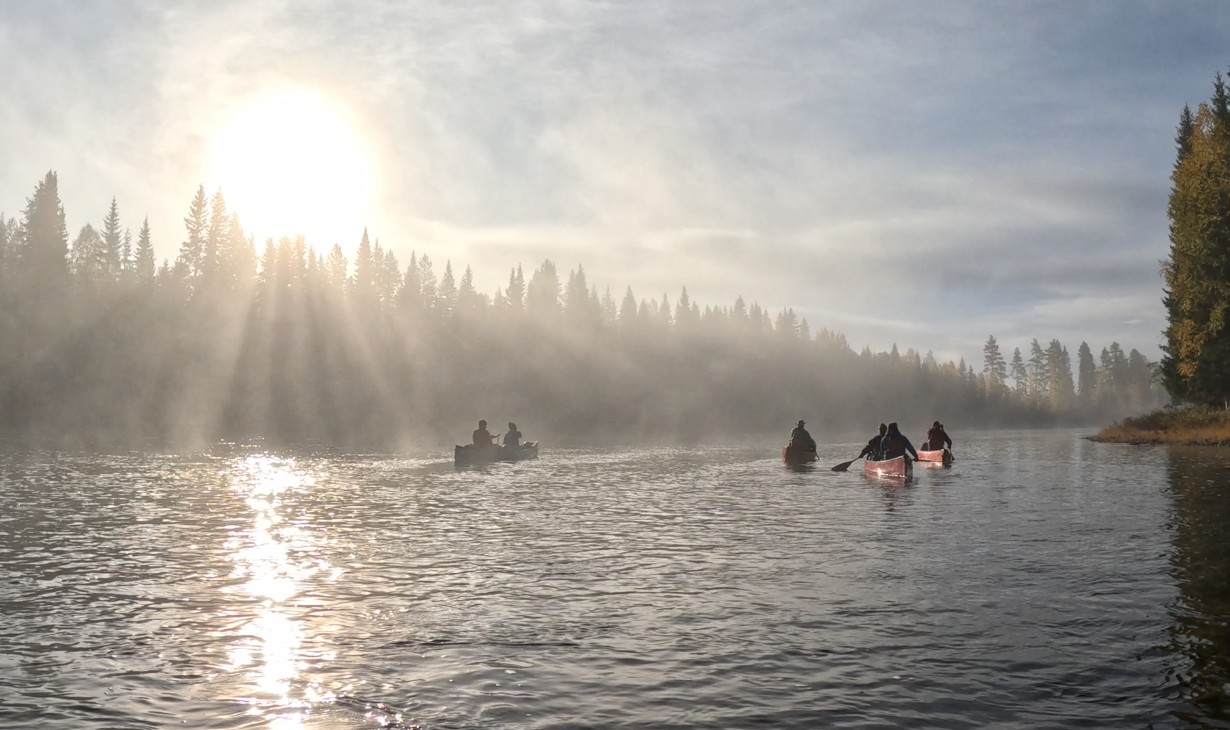
This part of Sweden, described as wilderness, was very different to the empty Canadian wilderness we had experienced on the Bloodvein. We frequently passed lakeside summerhouses, many occupied; occasionally a road crossed the river, and 5G mobile coverage was almost universal. But the scenery was stunning: early-morning mist lifting off the water, the autumnal trees changing colour. The green was interspersed with orange and the occasional red aspen. Beaver lodges along the lakes indicated activity, though we saw very little wildlife. The summer birds had flown south, and the moose had not yet arrived from the north (or they had been shot).
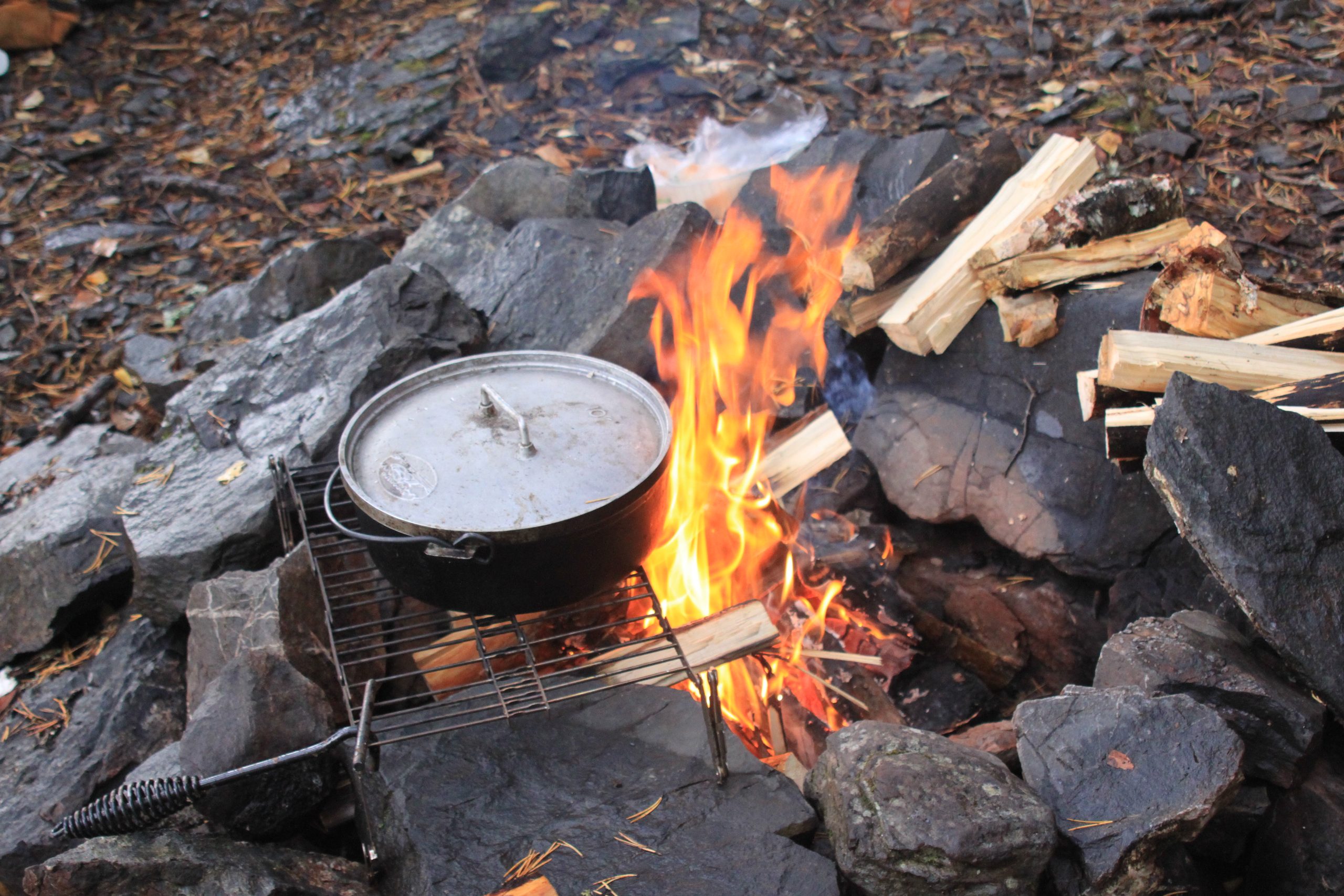
We worked well as a team, swapping boats, helping each other on the portages, and taking turns cooking the evening meal. Chicken in a creamy white sauce, beef stew, BBQ’d pork, meatballs and mash, all but one meal cooked on an open fire.
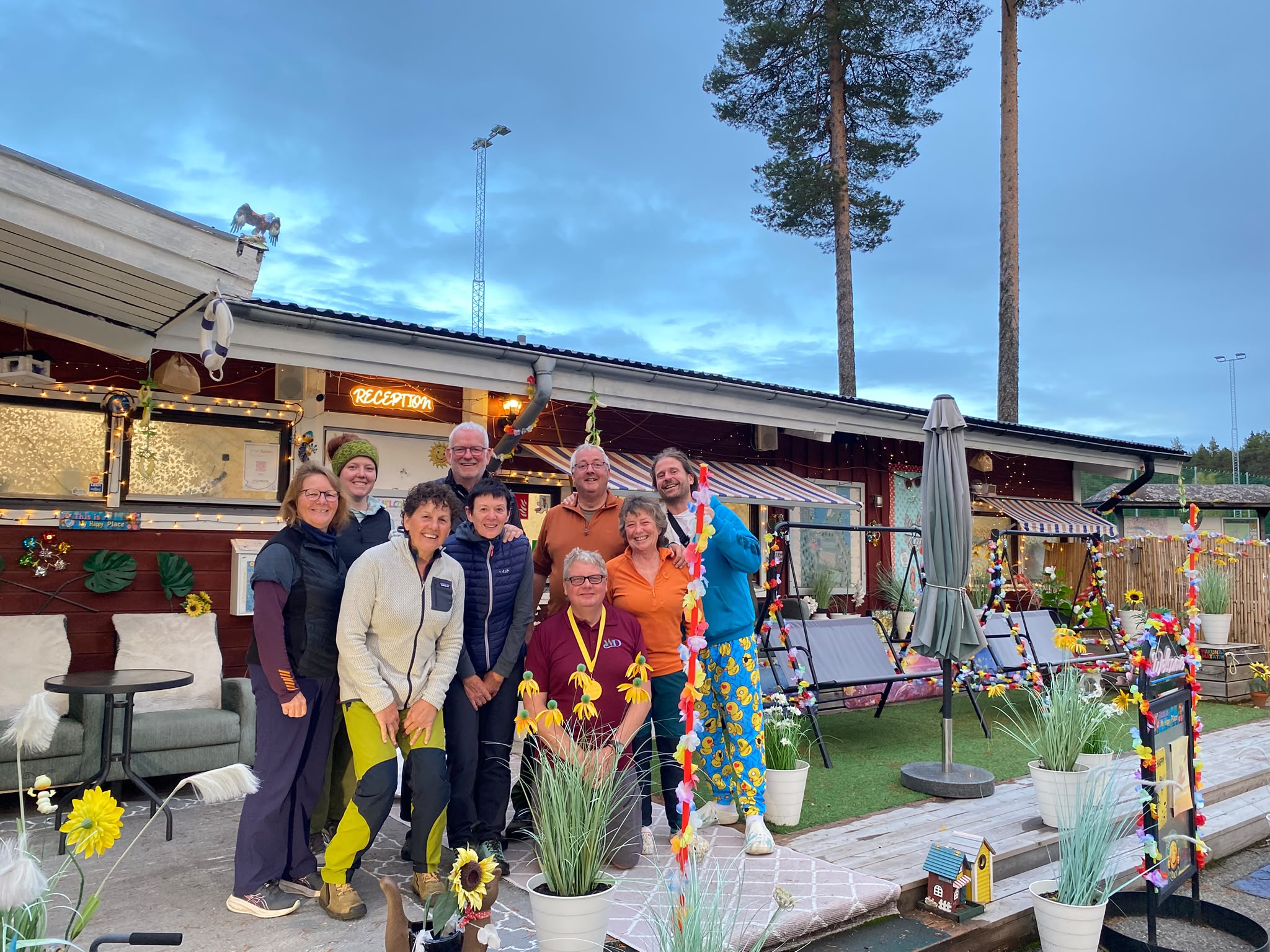
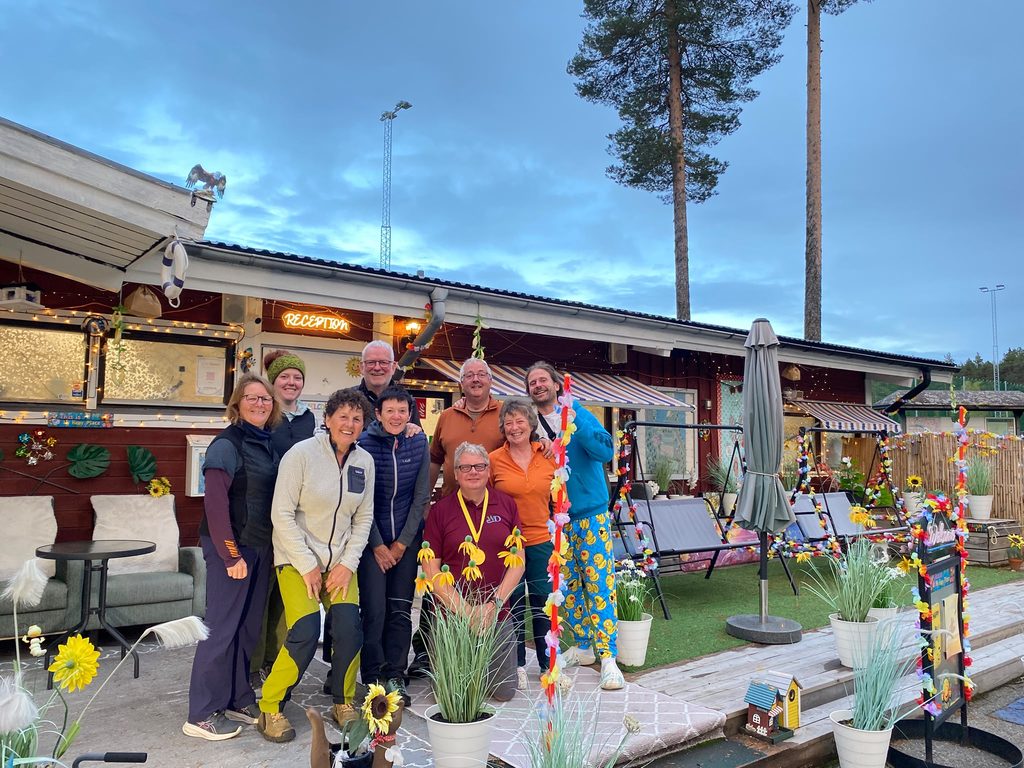
We paddled into Lit on day 5 to spend 2 nights at a very unusual campsite. ‘Bonkers’ was the word most people used to describe it, because the owners had gone to great lengths to decorate the site, especially the shower and toilet facilities, with all manner of signage and ‘ornaments’.
Two very different wilderness expeditions, and both different again to the very remote wilderness of the Canadian Yukon that we paddled last year. What is our attraction to go into the wilderness?
- You can only bring so much gear and apparel, so you have to learn to do without many of the conveniences of home. It’s a wonderful break from day-to-day life, refreshing…but it also triggers gratitude for the modern conveniences we take for granted, like flipping a light switch and turning on a tap for running water.
- Moving quietly through the water. Sometimes, the only sounds are your paddle quietly dipping in and coming out. The birds around you. The wind in the trees. Maybe it’s quiet enough to hear the water curl over your canoe’s bow as you paddle ahead. Away from media, traffic, and the other noises that surround us every day, you can rediscover the sounds of the natural world.
- We slow down and move at nature’s pace. That could mean leisurely paddling on a calm lake or quiet river. Or it could mean paddling hard to fight a headwind and waves. Sometimes it means accepting weather changes and adjusting our expectations for the experience.
- And of course, it’s a journey, a challenge to complete
Looking forward to 2027 and our next wilderness adventure.
Bill and Sian
The Bloodvein River, Manitoba Canada
The Harkan River, Jamtland, Sweden